

Umbraco Automate: How the CMS Is Becoming a Workflow Engine
What is Umbraco Automate?
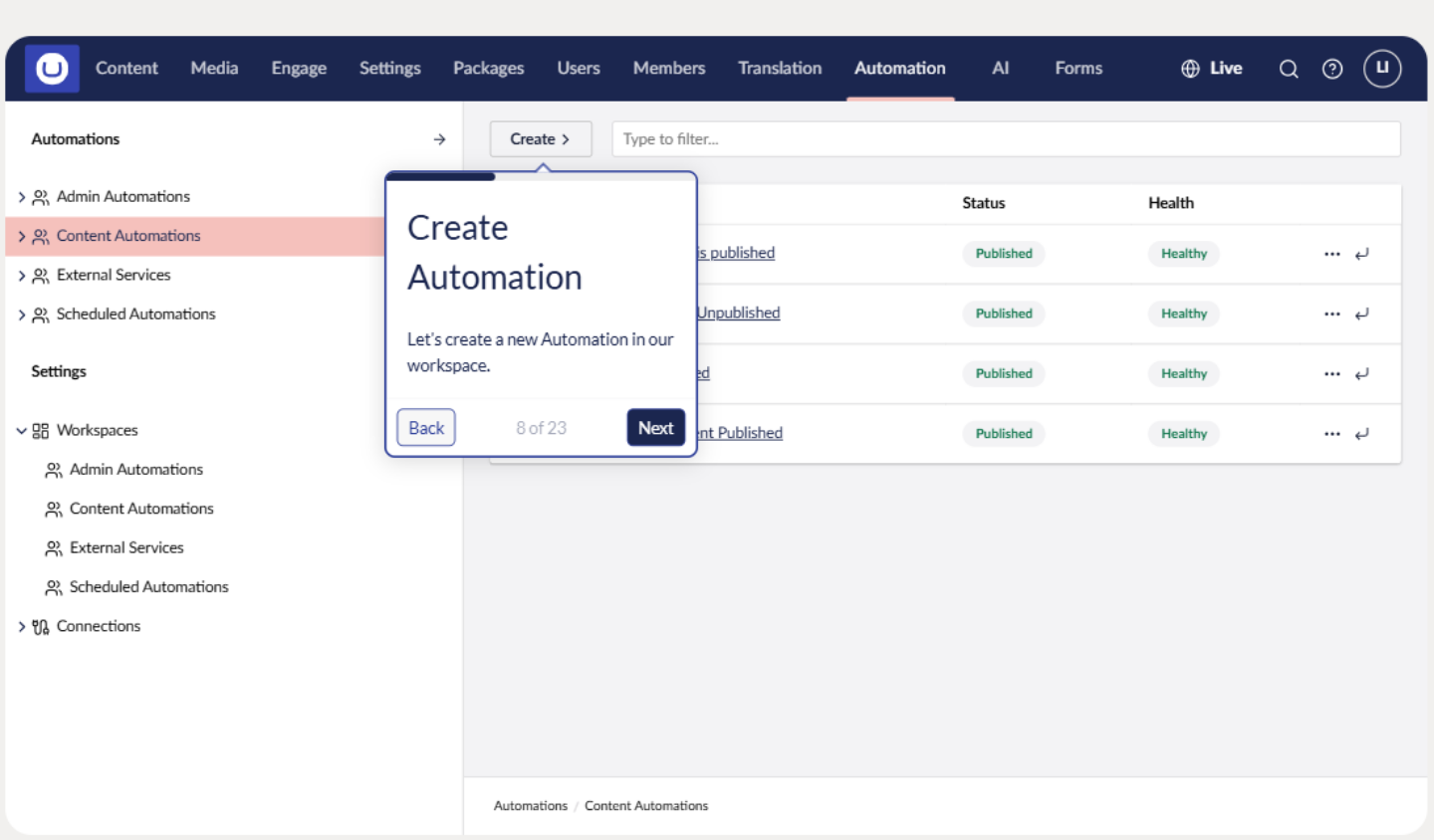
Umbraco Automate is a workflow automation engine built directly into the Umbraco CMS.
It allows teams to create automated workflows using a drag-and-drop interface inside the CMS, connecting content events, customer actions, integrations, and AI-driven steps in a single environment.
In simple terms:
Umbraco Automate brings workflow automation into the CMS, reducing the need for external automation tools for common digital journeys.
This makes it possible to design and run processes such as onboarding flows, notifications, and commerce actions directly inside Umbraco.
Why Umbraco Automate matters for CMS automation
Most digital platforms today rely on multiple systems to manage customer journeys and operational workflows.
A typical setup includes:
- A CMS for content
- A CRM for customer data
- External automation tools for workflows
- Custom integrations to connect everything
This distributed model increases complexity and creates duplication across systems.
Umbraco Automate introduces CMS automation as a native capability, allowing teams to define and run workflows where content and customer data already live.
From a Bluegrass perspective, this is less about adding another feature and more about a shift in where orchestration logic sits inside modern digital architectures.
What makes Umbraco CMS automation different
Umbraco Automate introduces a visual, drag-and-drop approach to workflow automation inside the CMS.
Teams can build “if this, then that” workflows such as:
- A user signs in → onboarding journey is triggered
- A form is submitted → sales notification is sent
- An order is completed → fulfilment process starts
- Customer behaviour changes → segmentation updates
The key shift is that these workflows are no longer external to the CMS. They are part of the content platform itself.
This is what makes Umbraco Automate relevant beyond just automation tooling. It changes the role of the CMS in the broader stack.
Native workflow automation across Umbraco products
Umbraco Automate is not limited to CMS events. It connects across the full Umbraco ecosystem.
Umbraco CMS
Content and member-based triggers such as publishing, updates, and user activity.
Umbraco Forms
Automation triggered by form submissions such as enquiries, registrations, and lead generation.
Umbraco Commerce
Commerce-driven triggers including:
- Order created
- Order finalised
- Order status changes
- Stock updates
Umbraco Engage
Behaviour-driven triggers including:
- Persona scoring changes
- A/B test events
This creates a unified event layer across content, commerce, and engagement data, which is typically fragmented across separate systems.
AI in workflow automation
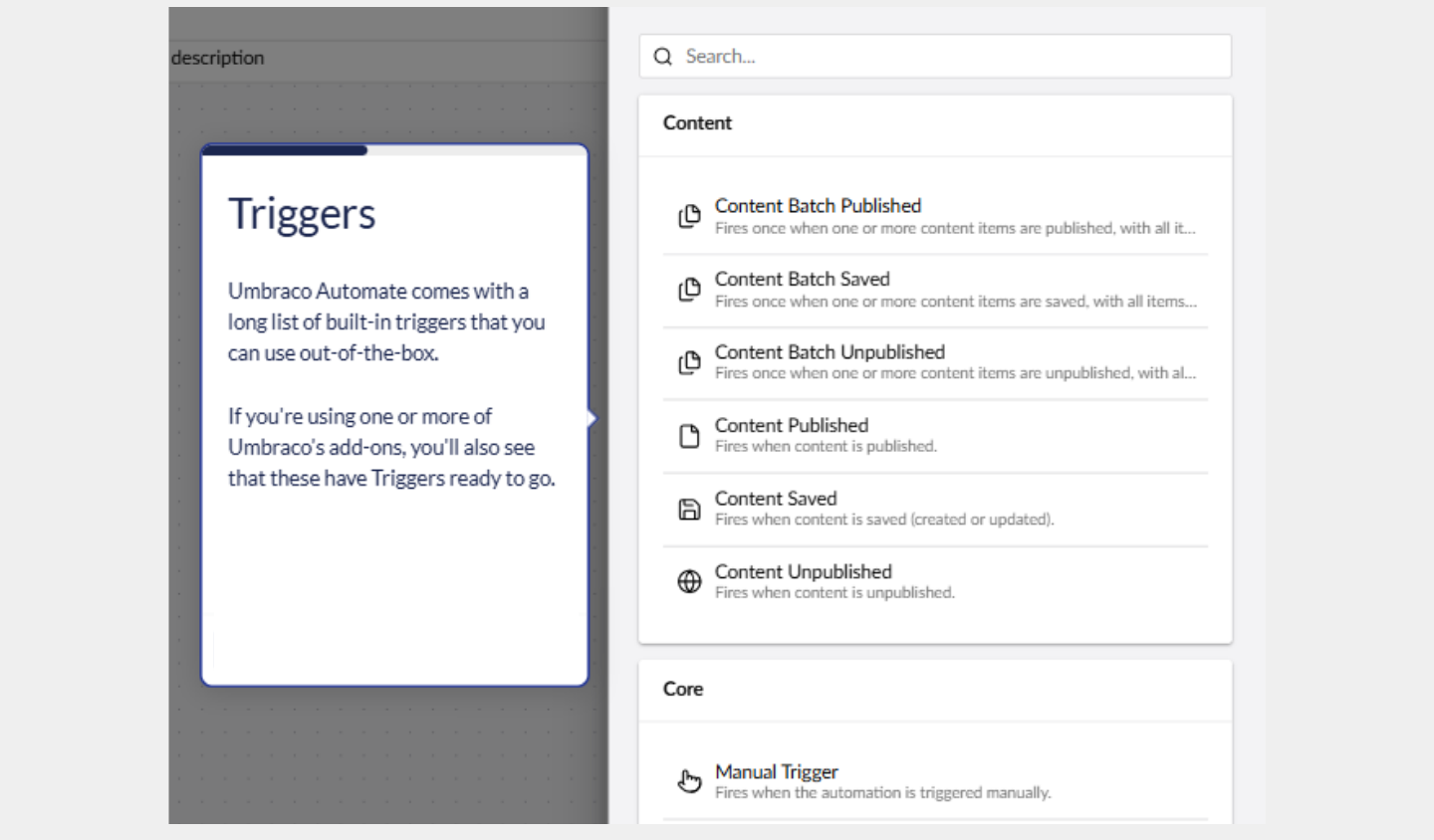
A key direction in Umbraco Automate is the integration of AI into structured workflows.
AI can be used within automation flows to:
- Generate content summaries
- Create alt text for images
- Assist with onboarding and messaging
- Support content transformation tasks
Importantly, AI is not treated as a standalone tool. It is embedded inside workflows.
Crucially, Umbraco includes human-in-the-loop approval steps, ensuring that AI-generated outputs can be reviewed before they are published or executed.
This is an important distinction for governance and enterprise adoption.
Data control and architecture considerations
A key architectural decision in Umbraco Automate is where it runs.
Unlike many external automation platforms, Automate operates inside your own infrastructure:
- Umbraco Cloud
- Azure environments
- Self-hosted setups
This means:
- Data remains within your environment by default
- External services are only used when explicitly configured
- Compliance and GDPR considerations are simplified
From an enterprise perspective, this reduces dependency on third-party workflow systems and keeps automation closer to the CMS layer where content and customer data already reside.
A Bluegrass perspective: what this changes in real-world delivery
From our perspective at Bluegrass Digital, Umbraco Automate is interesting not because it replaces existing automation platforms, but because it changes how solution architecture is approached.
We see three practical implications:
1. Less reliance on external workflow tools for lightweight automation
Not every workflow needs to live in a dedicated orchestration platform. Many common journey tasks can now sit inside the CMS.
2. A shift in where integration logic is designed
CMS projects increasingly become decision points for workflow design, not just content delivery systems.
3. Reduced complexity in composable architectures
By moving some automation closer to content, teams can reduce the number of systems involved in core customer journeys.
None of this means integration platforms disappear. Rather, their role evolves from being the primary orchestrator of digital journeys to supporting more targeted integration and workflow requirements.
Industry perspective from Codegarden
Nick Durrant, Managing Director at Bluegrass Digital, attended Codegarden 2026 where Umbraco Automate was announced.
“What stands out is not just the automation capability itself, but the fact that it sits inside the CMS. That changes where teams will naturally design workflow logic. For clients, the value is not adding another tool. It is reducing fragmentation and bringing more control back into the platform where content and customer journeys already exist.”
This reflects a broader trend we are seeing across enterprise implementations: a move toward simplifying digital ecosystems while increasing control at the CMS layer.

What this means for CMS architecture.
Umbraco Automate represents an important evolution in CMS platforms.
It positions the CMS not just as a content system, but as an active layer for workflow automation and digital experience orchestration.
For organisations building composable digital architectures, this raises an important question:
How much of your workflow logic should actually live inside your CMS?
At Bluegrass Digital, we expect this to become an increasingly important consideration in solution design as teams look to reduce complexity and improve control across their digital ecosystems.
When will Umbraco Automate be available?
Umbraco Automate is currently in beta for Umbraco 17, with a full release scheduled for:
9 July 2026
This early access phase gives teams an opportunity to explore CMS automation capabilities ahead of general availability.
